
Q&A: My Bird Won't Eat Its Pellets Help!
Apr 14, 2026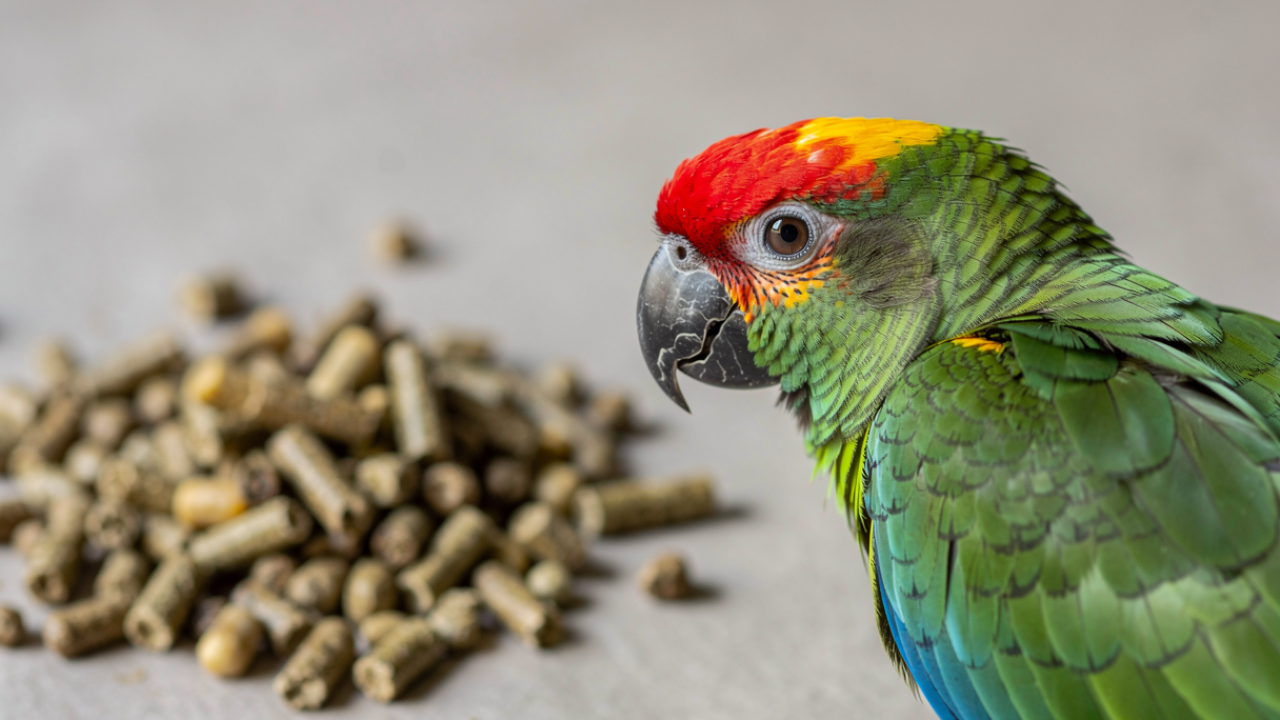
When your parrot won't eat pellets, it can feel like you're failing as a bird parent. You know pellets should form the foundation of a healthy diet, but your feathered friend treats those nutritious nuggets like they're made of cardboard. This resistance isn't unusual, and you're definitely not alone in this challenge.
Let nature be my guide here. Wild parrots spend most of their day foraging for varied foods across vast territories. They encounter hundreds of different textures, flavors, and colors throughout their lives. Your bird's initial rejection of pellets makes perfect evolutionary sense when you consider they're hardwired to be cautious about unfamiliar foods.
At BeakSchool we see this question constantly, along with several other common concerns that often arise together. Today we're addressing the pellet challenge plus four other frequently asked questions that reflect the real struggles parrot owners face daily. Each situation requires understanding your bird's natural behavior and working with their biology rather than against it.
Why Your Parrot Won't Eat Pellets and What to Do
The foundation of solving any feeding challenge starts with understanding that birds are naturally neophobic about new foods. In the wild, eating something unfamiliar could mean death. Your parrot's caution around pellets isn't stubbornness. It's survival instinct.
Creating psychological appetite becomes crucial here. When food sits in a bowl all day, your bird has no motivation to try anything new. They know their familiar foods will be available whenever they want them. This abundance eliminates the natural foraging drive that motivates food exploration in wild flocks.
The most effective approach involves strategic food presentation rather than food deprivation. Remove the food bowl for specific periods during the day, then offer pellets when your bird is genuinely interested in eating. This mimics the natural feast and famine cycles that wild parrots experience.
Temperature can make a significant difference. Room temperature pellets often feel foreign to birds accustomed to warm seeds. Try warming pellets slightly with warm water or mixing them with a tiny amount of warm, unsweetened applesauce. The familiar temperature and slight moisture can make pellets more appealing without triggering hormonal behaviors.
Repetition builds confidence with new foods just like with behaviors. Place a few pellets in different locations around the cage daily, even if your bird ignores them initially. Familiarity breeds acceptance over time. Some birds need weeks of seeing pellets before they'll even taste them.
The mixing method works well for many families. Start with 90 percent of your bird's current preferred food and 10 percent pellets. Over several weeks, gradually shift the ratio until pellets dominate the mix. This slow transition respects your bird's caution while moving toward better nutrition.
High quality pellets make the transition easier. TOPS organic pellets consistently get positive responses from reluctant birds. Roudybush and Zupreem Natural also work well. Harrison's has seen reports of behavioral improvements when birds switch off it, though individual responses vary significantly.
Building Trust When Your Parrot Suddenly Starts Biting
When your parrot biting suddenly becomes an issue, the first step involves examining what changed in their environment or routine. Sudden behavior changes rarely happen in a vacuum. Something in their world shifted, and biting represents their attempt to communicate about that change.
The ABCs of behavior provide the framework for understanding this shift. The antecedent encompasses everything happening before the bite. Did you change your morning routine? Is there new furniture in the room? Are you wearing different cologne? Birds notice environmental details we might miss entirely.
Labels become roadblocks here. Calling your bird aggressive or mean puts the problem on a shelf where it can't be solved. Observable behavior opens doors. "My bird lunges when I reach toward their food bowl" gives us something concrete to work with. "My bird is being aggressive" leads nowhere productive.
Most birds described as biting without warning have been communicating their discomfort for quite some time. They started with subtle body language signals that went unnoticed or unheeded. Over time, they learned that only dramatic responses get human attention.
The comfortable bird shows soft, slightly fluffed feathers, relaxed posture, and open soft eyes. They might lean toward you or raise one foot in a relaxed stance. Early discomfort signals include feathers slicking tight against the body, posture shifting more upright, eyes becoming more intense, and quick scanning for exits.
When you see these early warning signs, respect them immediately. The bird is having a conversation with you through body language. Ignoring these signals teaches them to escalate to louder communication methods like biting.
Protected contact training provides an excellent solution for birds showing sudden aggression. Train near the cage with the door closed. Your bird feels secure in their territory while you can interact safely. This arrangement dramatically reduces conflict while rebuilding trust through positive interactions.
The trust account concept applies perfectly here. Think of your relationship like a piggy bank where positive interactions are deposits and forced interactions are withdrawals. One forced step up can drain the value of many gentle, consensual interactions. Focus on making deposits through choice-based training and respecting your bird's communication.
Should You Get a Second Parrot? The Real Answer
The question of whether you should get a second parrot reveals a fundamental misunderstanding about parrot social needs that we address frequently inside BeakSchool. Wild parrots do live in large flocks, but adding another bird to your home doesn't automatically solve behavioral problems or loneliness.
Individual parrots have distinct personalities just like people do. Some birds genuinely prefer human companionship over other birds, especially hand-raised parrots who imprinted on humans during critical developmental periods. These birds often view humans as their flock and may actually become more stressed with another bird in the household.
The fantasy scenario involves two birds becoming best friends who entertain each other while you're at work. The reality often includes territorial disputes, jealousy over human attention, increased noise levels, doubled veterinary costs, and complex flock dynamics that require careful management.
Before considering a second bird, honestly evaluate your current bird's needs. Are they getting adequate social interaction, mental stimulation, and physical exercise? Many behavioral problems attributed to loneliness actually stem from insufficient enrichment or unclear communication between bird and owner.
If you're considering a companion for legitimate reasons rather than hoping to solve existing problems, quarantine becomes non-negotiable. New birds must be isolated for at least 45 days with separate air circulation to prevent disease transmission. This extended process gives you time to ensure both birds remain healthy before any introductions.
The introduction process itself requires months of careful management. Birds need to see each other from safe distances before sharing any space. Even birds who seem to get along initially can develop conflicts during hormonal seasons or over preferred perching spots.
Two birds also means potentially losing the close bond you've built with your current companion. Birds often prefer each other's company over human interaction once they form pair bonds. This isn't always the case, but it represents a real possibility you should consider seriously.
Rather than adding another bird, focus on enriching your current bird's environment through foraging opportunities, varied perching, and interactive training sessions. These activities address the mental stimulation needs that drive many behaviors mistakenly attributed to loneliness.
Understanding Feather Plucking in Parrots
When asking why is my parrot plucking feathers, owners often expect a simple answer to this complex behavior. Feather plucking rarely has a single cause, making it one of the most challenging issues we encounter in parrot care.
Medical causes must be ruled out first through comprehensive avian veterinary examination. Skin infections, allergies, nutritional deficiencies, and internal diseases can all trigger plucking behaviors. Even if the plucking seems obviously behavioral, underlying medical issues might be contributing factors.
Environmental factors play huge roles in feather condition. Dry air from heating systems can make skin itchy and uncomfortable. Non-stick cookware, scented candles, air fresheners, and cleaning products release fumes that irritate sensitive respiratory systems. These environmental toxins can trigger plucking even at levels humans can't detect.
Boredom represents a major contributor to destructive behaviors including feather plucking. Wild parrots spend 6-8 hours daily foraging for food across varied terrain. Captive birds with food available in a bowl all day lack this essential mental stimulation. Their intelligence needs outlets or it turns inward destructively.
The cage environment itself might contribute to plucking behaviors. Covering cages to complete darkness creates nest cavity conditions that can trigger hormonal responses including territorial feather pulling. Bar spacing that allows other pets to get too close can create chronic stress. Cage placement near windows might expose birds to outdoor predators that trigger constant vigilance.
Nutritional imbalances affect feather quality significantly. Diets high in seeds and low in fresh vegetables often lack the amino acids necessary for healthy feather production. Poor quality feathers feel uncomfortable and may trigger picking behaviors that escalate into habitual plucking.
Hormonal influences can initiate plucking behaviors during breeding seasons. Lengthening daylight hours, warm temperatures, and access to potential nesting sites like paper shreds or small dark spaces can trigger breeding behaviors including territorial feather removal.
Once feather plucking becomes established, it often continues as a learned comfort behavior even after original triggers are removed. The physical sensation of pulling feathers releases endorphins that create a self-reinforcing cycle. Breaking this pattern requires addressing underlying causes while providing alternative outlets for the bird's energy and attention.
Differential reinforcement works better than trying to stop plucking directly. Instead of focusing on the unwanted behavior, heavily reinforce incompatible activities like foraging, training, or playing with appropriate toys. A bird engaged in rewarding activities has less time and motivation for destructive behaviors.
Creating Food Motivation Without Deprivation
Understanding how to get parrot to like you often connects to food presentation and training opportunities. Creating genuine food motivation doesn't require starving your bird or causing distress. It involves working with their natural foraging instincts rather than against them.
The concept of psychological appetite mimics what happens in wild flocks. Food isn't constantly available in nature. Parrots experience periods of abundance followed by active searching for their next meal. This natural rhythm creates the motivation that drives exploration and learning.
Strategic food timing can create this motivation safely. Remove the food bowl for 2-3 hours during your most active training times, then use that natural hunger to motivate participation in learning activities. Your bird becomes genuinely interested in working for food rewards rather than grudgingly tolerating training while already full.
The quality of food rewards matters enormously. If you're offering sunflower seeds as treats while the bowl contains sunflower seeds, there's no motivation to work. Reserve the highest value foods exclusively for training sessions. Pine nuts, dried fruit pieces, or small amounts of healthy people food become powerful motivators when they're only available through cooperative behavior.
Foraging devices provide another avenue for creating natural food motivation. Hide portions of your bird's daily food in puzzle toys, paper cups, or wrapped in paper. This arrangement requires work to access food, just like in the wild. The physical and mental effort involved in extracting food creates satisfaction that bowl feeding can't match.
Timing becomes crucial when using food motivation. Training sessions should happen when your bird is genuinely interested in food, not when they're completely full or desperately hungry. Watch for subtle signs that indicate optimal training readiness: alert posture, interest in your movements, and willingness to approach.
The animal is always the operator in effective training. You can't force a bird to be motivated or to like you. You can create conditions that make cooperation worthwhile from their perspective. Focus on making yourself interesting and rewarding rather than demanding attention or affection.
Reading Your Bird's Body Language During Diet Changes
Two-way communication becomes essential when transitioning your bird to new foods or addressing behavioral challenges. Your bird constantly provides feedback through body language, and learning to read these signals prevents many common problems before they escalate.
Stress signals during feeding time include rapid breathing, feathers held tight against the body, and eyes that appear more alert or anxious than usual. These signs suggest your bird feels pressured about food choices. Backing off and allowing more time for gradual acceptance works better than pushing forward with changes.
Positive feeding body language includes relaxed feathers, steady breathing, and willingness to investigate new foods even if they don't eat them immediately. Birds showing these signs are in the right emotional state for food exploration. They might not eat new items today, but they're processing the information for future consideration.
Window of opportunity principles apply to food presentations just like training cues. Offer new foods for specific periods, then remove them whether your bird ate them or not. This approach creates natural scarcity that can increase interest over time. Leaving refused food available all day teaches your bird they can safely ignore it indefinitely.
The relationship between food and behavior becomes clearer when you understand that eating is a vulnerable activity in the wild. Birds must lower their guard to focus on food, making them temporarily more susceptible to predators. Your bird's caution around new foods reflects this deep-seated survival programming.
Environmental setup affects feeding comfort significantly. Birds often feel more secure eating when they have clear sight lines to exits and feel protected from potential threats. Feeding stations placed in open areas with good visibility often see better acceptance than those in corners or enclosed spaces.
Inside BeakSchool, we teach these fundamental concepts through detailed video lessons that show exactly how to read your bird's subtle communication and respond appropriately. The science-based methods we use respect your bird's natural behavior while achieving the nutrition and training goals that matter to your family. Learn more inside BeakSchool where we teach these methods step by step through science-based video lessons that transform the relationship between you and your feathered companion.
Remember that every bird progresses at their own pace. Some accept dietary changes within days while others need months of patient exposure. Respect your individual bird's timeline rather than forcing artificial deadlines. Sustainable changes happen when birds choose to participate because cooperation feels rewarding and safe.
The information in this post is for educational purposes only. If your bird is experiencing behavioral or nutritional concerns, please consult a certified avian professional. In the case of a medical emergency, contact your local avian veterinarian immediately.
