
Q&A: Should I Get a Second Bird?
Apr 19, 2026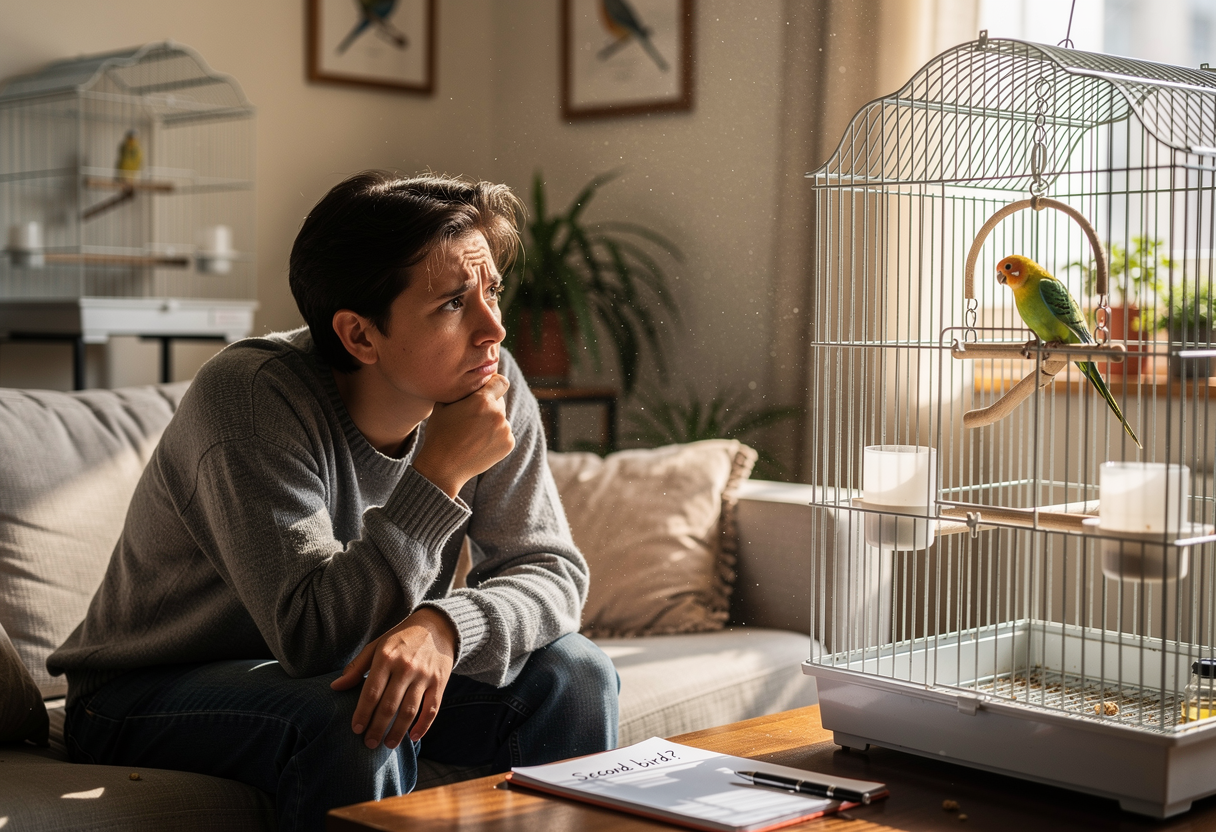
The question comes up constantly in parrot communities: should I get second parrot? Usually it surfaces when an owner faces challenges with their current bird. Maybe their parrot seems lonely. Perhaps behavioral issues feel overwhelming. Sometimes the bird appears bored or understimulated.
Before diving into whether a second bird is right for your situation, we need to examine what's really driving this question. At BeakSchool, we've seen this scenario play out hundreds of times. The desire for a second bird often stems from misunderstanding the first bird's needs or attributing human emotions to natural parrot behaviors.
Wild parrots do live in flocks, but captive parrots form their primary bond with their human family. Adding another bird rarely solves the underlying issues driving the initial question. Instead, it often creates new challenges while leaving the original problems unresolved.
The Real Question Behind Getting a Second Bird
When owners ask whether they should get a second parrot, they're usually trying to solve a specific problem. The bird seems unhappy. Behavioral issues feel insurmountable. The current training isn't working. The parrot appears stressed or anxious.
Labels become roadblocks here. "My bird is lonely" doesn't give us actionable information. "My bird screams when I leave the room" describes observable behavior we can address. "She's depressed" puts the problem on a shelf. "She sits at the bottom of her cage and won't interact" opens the door to solutions.
Most commonly, owners consider a second bird when facing these specific scenarios. The parrot bites family members suddenly after months of good behavior. The bird refuses to eat pellets despite multiple attempts at diet conversion. Feather plucking appears seemingly overnight. The parrot shows no interest in bonding with anyone in the household.
Each of these situations has specific causes rooted in environment, training history, or health. Adding another bird doesn't address these root causes. It adds complexity to an already challenging situation.
The trust account concept applies here. Every interaction with your bird is either a deposit or withdrawal. Forced interactions, ignored body language, and unmet needs create withdrawals. When the account runs low, behaviors that seem sudden actually make perfect sense. Your parrot has been communicating discomfort for weeks or months, but those early signals went unnoticed.
When Loneliness Isn't Actually Loneliness
Parrot owners frequently interpret normal behaviors as signs of loneliness. A bird that calls when you leave the room isn't necessarily lonely. Wild parrots use contact calls to maintain flock cohesion. Your bird is doing what comes naturally.
Similarly, a parrot that seems "bored" might actually be understimulated or lacking appropriate foraging opportunities. Wild parrots spend 60 to 70 percent of their waking hours foraging. A bird with food available in a bowl all day has lost this primary occupational activity.
The key is understanding natural parrot behavior through the lens of wild biology. Let nature be your guide. Parrots evolved to live in large social groups, but they also form pair bonds within those flocks. In captivity, humans typically fill the role of the pair bond partner.
A well-bonded parrot doesn't need another bird for companionship any more than a happily married person needs a second spouse. The relationship with their human family provides the social connection they crave.
If your parrot won't eat pellets, this isn't loneliness. It's either a health issue requiring veterinary attention or a training challenge requiring patience and proper technique. Wild parrots are naturally neophobic about new foods. Converting to pellets requires strategic food presentation and understanding of psychological appetite.
When owners ask how to get parrot to like you, they're usually dealing with trust account withdrawals. The bird has learned that human hands mean forced interactions or invasion of personal space. This requires rebuilding trust through protected contact training and respecting body language, not adding another bird to the mix.
Solving the Problems That Make You Consider Another Bird
Most behavioral challenges that drive the "second bird" question have specific solutions rooted in understanding the ABCs of behavior. A is the antecedent, everything in the environment before the behavior occurs. B is the behavior described in observable terms. C is the consequence, what happens immediately after, which drives future behavior.
If your parrot biting suddenly becomes an issue, examine the antecedents. What changed in the environment? Did someone new enter the household? Has the daily routine shifted? Are hormonal triggers present like increased daylight hours or warm, soft foods?
Sudden biting often isn't sudden at all. Birds communicate discomfort through body language long before they resort to biting. Feathers slicking tight against the body, eyes becoming more intense, posture shifting upright, leaning away from offered hands. By the time a bird bites, they've usually been trying to communicate for days or weeks.
The solution isn't another bird. It's learning to read and respect your current bird's communication. Protected contact training allows you to rebuild trust without putting anyone at risk. Training through the cage bars creates a safe space where both bird and human can succeed.
For parrots that seem withdrawn or uninterested in interaction, examine the trust account. Have recent interactions been primarily withdrawals? Forced step ups, ignored body language, invasion of personal space during hormonal periods? The bird isn't lonely. They're protecting themselves from uncomfortable interactions.
Feather plucking represents another common trigger for considering a second bird. Owners assume their parrot is lonely or bored. While environmental enrichment plays a role, feather plucking usually indicates medical issues, environmental stressors, or learned behaviors that require specific intervention.
Why is my parrot plucking feathers becomes answerable when we examine all possible causes systematically. Health issues like bacterial infections, parasites, or nutritional deficiencies. Environmental factors like low humidity, poor air quality, or inadequate lighting. Behavioral triggers like hormonal stimulation, lack of foraging opportunities, or attention-seeking behaviors that accidentally got reinforced.
The Reality of Managing Multiple Birds
Adding a second bird creates logistical challenges that many owners underestimate. Each bird needs individual attention, training, and relationship building. Two birds don't automatically entertain each other. They often compete for your attention instead.
Quarantine protocols require keeping new birds completely separated for 30 to 45 days minimum. This means separate rooms, separate air circulation, and careful hygiene practices between interactions. Many owners lack the space or setup for proper quarantine.
Even after quarantine, introducing birds requires careful management. Some birds never accept each other. Others may get along initially but develop conflicts later, especially during breeding seasons or territorial disputes.
Food management becomes more complex with multiple birds. One bird might need a specialized diet while another requires weight management. Training sessions need to happen separately to prevent competition and ensure each bird gets individual attention.
Veterinary costs double or triple. Emergency situations become more stressful when managing multiple sick birds simultaneously. Boarding or pet-sitting arrangements require more specialized care.
At BeakSchool, we've seen countless situations where owners got a second bird to solve problems with their first, only to end up with twice the challenges and none of the original issues resolved.
Better Solutions Than Adding Another Bird
Instead of getting a second parrot, focus on enriching your current bird's life and addressing the specific issues driving your concerns. Environmental enrichment provides mental stimulation that rivals having another bird present.
Foraging opportunities should occupy several hours of your bird's day. Hide food inside paper cups, wrap treats in coffee filters, stuff vegetables into toy parts that require manipulation. Wild parrots work for every bite. Captive parrots need similar challenges.
Training provides mental stimulation while building the human-bird relationship. Target training, simple tricks, and cooperative care behaviors give your bird choices and control while strengthening your bond. The more your bird chooses to participate because training is rewarding, the more confident and trusting they become.
If your current bird seems understimulated, increase interaction quality rather than adding another bird. Twenty minutes of focused training or play provides more value than hours of passive presence from another parrot.
Address dietary issues systematically. Most parrots resist pellets initially because they're neophobic about unfamiliar foods. Converting requires patience, proper timing, and understanding of natural feeding behaviors. Offering pellets when your bird is hungriest, typically first thing in the morning, increases acceptance rates.
For behavioral challenges, learn more inside BeakSchool where we teach these methods step by step through science-based video lessons. Understanding body language, implementing protected contact training, and building positive reinforcement history creates lasting behavioral change.
Create a structured daily routine that includes training time, foraging opportunities, social interaction, and independent play. Parrots thrive on predictability. A well-structured day provides security and mental stimulation without requiring another bird.
Examine your expectations honestly. Parrots aren't naturally cuddly pets. They're intelligent wild animals with complex needs and natural behaviors that don't always align with human preferences. Adjusting expectations often solves perceived "problems" that were actually normal parrot behaviors.
Consider the commitment involved in parrot ownership. These birds can live 30 to 80 years depending on species. Adding a second bird doubles this commitment. Make sure you're prepared for decades of care, training, and relationship building with multiple animals.
If you genuinely want a second bird for your own enjoyment rather than to solve problems with your first, ensure you have adequate time, space, and resources for both birds to thrive individually. Each bird deserves its own relationship with you and individual attention to its unique needs.
The decision to add another parrot should never be driven by behavioral problems with your current bird. Those issues require specific solutions rooted in understanding natural parrot behavior, proper training techniques, and environmental management. A second bird often complicates these challenges rather than resolving them.
Focus on being the best parrot owner you can be to your current bird first. Master the skills needed for successful parrot ownership with one bird before considering adding complexity to your household. Your parrot will be happier, and you'll be better prepared if you eventually decide to expand your flock for the right reasons.
The information in this post is for educational purposes only. If your bird is experiencing behavioral or nutritional concerns, please consult a certified avian professional. In the case of a medical emergency, contact your local avian veterinarian immediately.
