
Q&A: Why Is My Bird Plucking?
Apr 19, 2026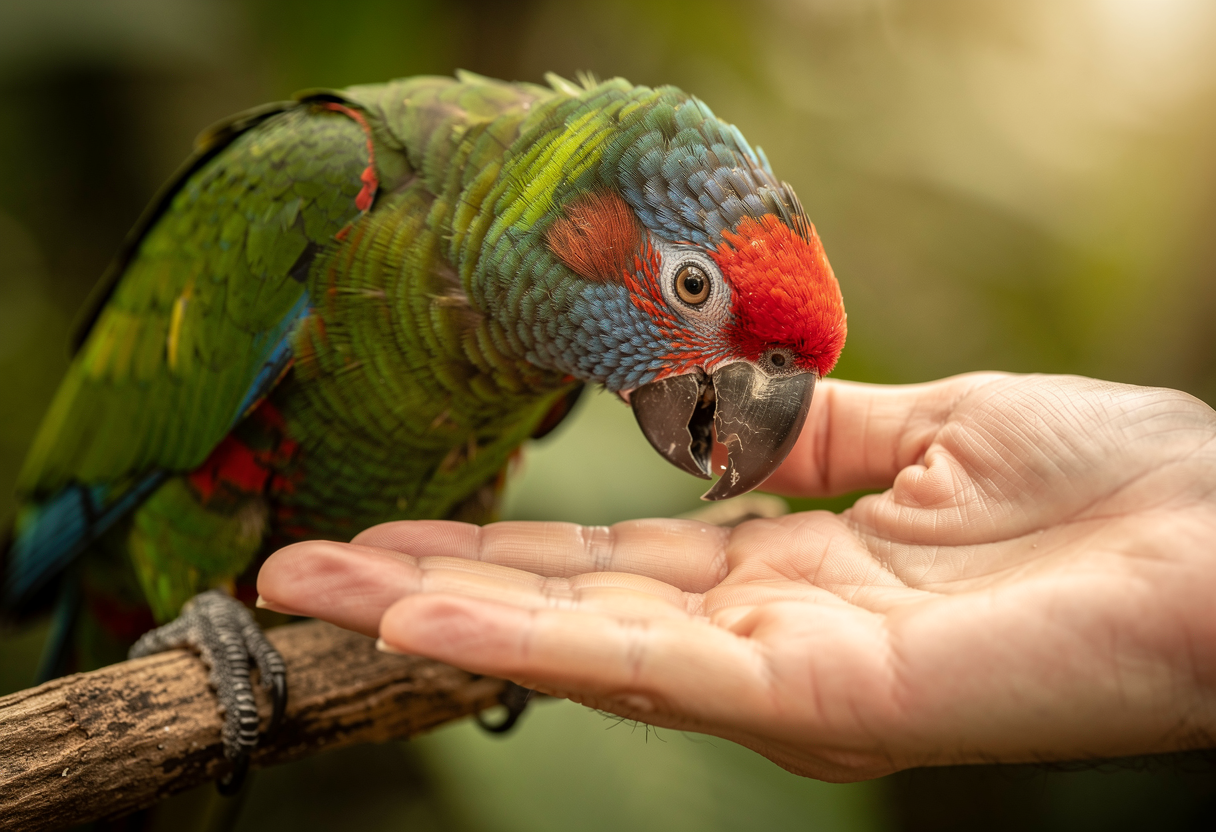
When parrot owners ask why is my parrot plucking feathers, they're usually dealing with one of the most heartbreaking behaviors a bird can develop. Watching your feathered companion systematically remove their beautiful plumage feels devastating. The good news? Feather plucking is almost always solvable when we understand what drives it and address the underlying causes systematically.
At BeakSchool, we approach feather plucking as a communication tool. Your bird is telling you something important through this behavior. The key is learning to listen and respond appropriately. Let nature be our guide here. Wild parrots rarely pluck their feathers because their environment provides everything they need psychologically and physically.
This comprehensive guide addresses the most common questions we receive about feather plucking, from identifying root causes to building the trust necessary for lasting change. Every case is unique, but the principles remain consistent across species and situations.
Understanding the Root Causes of Feather Plucking
Feather plucking never happens in a vacuum. It's always a response to something in the bird's internal or external environment. The most common mistake owners make is focusing solely on stopping the plucking without addressing what's driving it. This approach typically fails because it treats the symptom rather than the cause.
At BeakSchool, we use the ABCs of behavior to understand any challenging behavior, including plucking. The Antecedent is everything in the environment before the plucking begins. The Behavior is the observable action of removing feathers. The Consequence is what happens immediately after, which determines whether the behavior continues or stops.
Most plucking cases fall into several categories. Medical issues create physical discomfort that birds try to relieve through plucking. Environmental stressors like poor lighting, inadequate nutrition, or lack of mental stimulation trigger psychological distress. Relationship problems with human family members create chronic stress that manifests as self-destructive behavior.
Understanding your specific bird's triggers requires careful observation. Keep a plucking diary noting when it happens, what preceded it, and how you responded. Patterns emerge quickly when you track behavior systematically. A bird who plucks every evening might be overwhelmed by household activity. One who plucks when left alone could be experiencing separation anxiety.
The emotional component cannot be ignored. Parrots are highly social creatures who form deep emotional bonds. When those relationships become sources of stress rather than comfort, plucking often follows. This is why addressing the human-bird relationship is crucial in most plucking cases.
Medical Issues: The Starting Point for Any Plucking Case
Every feather plucking case must begin with a thorough veterinary examination by an avian specialist. Medical causes are more common than many owners realize, and attempting behavioral modification when a bird is physically uncomfortable will fail every time.
Skin irritation from parasites, allergies, or infections creates the urge to scratch and pick. Nutritional deficiencies affect feather quality and skin health. Hormonal imbalances trigger obsessive grooming behaviors. Pain from arthritis or other conditions can manifest as focused plucking in specific areas.
Even when no obvious medical cause is found, ruling out physical problems gives you confidence to focus on environmental and behavioral factors. Some conditions require specific testing beyond a basic examination, so work with a veterinarian experienced in avian medicine who understands the complexity of plucking cases.
Blood work reveals nutritional deficiencies and organ function. Skin scrapings identify parasites or bacterial infections. X-rays show internal problems that might cause discomfort. These diagnostics provide crucial baseline information for any treatment plan.
Don't skip this step even if you're convinced the plucking is behavioral. Medical and behavioral causes often intertwine, creating a cycle where physical discomfort leads to stress-induced plucking, which then causes more physical irritation. Breaking this cycle requires addressing both components simultaneously.
Environmental Factors That Trigger Plucking Behaviors
Parrots evolved in complex forest environments filled with varied sights, sounds, and activities. Our homes often provide the opposite: predictable, understimulating environments that leave intelligent birds with excess mental energy and nowhere to direct it. Plucking becomes the outlet for this frustration.
Lighting plays a crucial role in avian psychology and physiology. Insufficient natural light or inconsistent day-night cycles disrupt hormonal balance and mood regulation. Birds need approximately 12 hours of bright light and 12 hours of complete darkness to maintain healthy circadian rhythms.
Foraging opportunities are essential for psychological well-being. Wild parrots spend 60 to 70 percent of their waking hours searching for and processing food. Pet birds who receive all their nutrition in a bowl have vast amounts of unoccupied time and mental energy. This can manifest as plucking, screaming, or other unwanted behaviors.
Air quality affects respiratory health and comfort. Dusty environments, cooking fumes, cleaning chemicals, and cigarette smoke irritate sensitive respiratory systems. Birds experiencing chronic low-level respiratory irritation often develop plucking behaviors as they try to relieve discomfort.
The social environment matters enormously. Constant household chaos creates chronic stress. Complete isolation creates different stress. Finding the right balance for your individual bird requires observation and adjustment. Some birds thrive in active households while others need quiet spaces to retreat when overwhelmed.
Cage placement influences stress levels significantly. A cage positioned where the bird cannot see approaching family members creates anxiety. One placed in a high-traffic area might provide too much stimulation. The ideal location allows the bird to observe household activity while having visual barriers for privacy when needed.
Trust and Relationship Dynamics in Feather Plucking
The relationship between bird and owner functions like a trust account or piggy bank. Every positive interaction makes a deposit. Every stressful interaction creates a withdrawal. Withdrawals hit much harder than deposits, so one forced interaction can drain the value of many positive experiences.
Many plucking birds have experienced repeated trust account withdrawals. Perhaps they've been grabbed from their cage when they didn't want to come out. Maybe their body language signals were ignored when they communicated discomfort. These experiences teach birds that humans are unpredictable and potentially dangerous.
When a bird doesn't trust their human family, everything becomes stressful. The approach of a person triggers fight-or-flight responses. Being asked to step up creates conflict between wanting to please and feeling unsafe. This chronic stress state often manifests as plucking behavior.
Rebuilding trust requires patience and consistency. It means learning to read your bird's body language accurately and responding appropriately every time. When a bird shows early discomfort signals like slightly slicked feathers or a more upright posture, backing off immediately makes a trust deposit. Pushing through these signals makes a withdrawal.
The process cannot be rushed. Some birds need weeks or months to rebuild trust accounts that were damaged over years. The timeline depends on the individual bird's personality, past experiences, and the consistency of the new approach. Rushing this process typically sets progress back significantly.
Building Trust When Your Parrot Won't Let You Near
Many people ask how to get parrot to like you, especially when dealing with a plucking bird who seems to reject all human interaction. The answer lies in understanding that trust must be earned, not demanded. You cannot make a bird like you, but you can make yourself worth liking.
Start with protected contact training, working with your bird at or near their cage with the door closed. This removes the pressure of physical interaction while allowing relationship building. Offer treats through the bars, talk softly, and simply be present without asking for anything in return.
Reading body language becomes crucial at this stage. A bird leaning slightly toward you with soft, slightly fluffed feathers is showing interest. One with slicked feathers leaning away is communicating discomfort. Respecting these signals consistently builds trust over time.
Many owners make the mistake of trying to prove their good intentions through persistence. If a bird moves away when you approach, moving closer doesn't demonstrate love—it demonstrates that you ignore their communication. This approach creates more fear and sets back any progress made.
Instead, approach slowly and watch for the bird's response. When they show any sign of discomfort, stop immediately. Wait for them to relax before approaching again. This gives the bird control over the interaction, which is a primary reinforcer alongside food, water, and shelter.
Some birds respond well to parallel activities where you engage in your own tasks near their cage without focusing attention on them directly. Reading, working on a laptop, or doing quiet crafts allows the bird to observe you without feeling pressured to interact. Over time, curiosity often overcomes caution.
The window of opportunity concept applies here. Give your bird a short, clear window to choose interaction. If they don't respond, close the window and try again later. This isn't punishment—the mouse simply went down the hole. Try again when conditions might be more favorable.
Creating an Environment That Reduces Plucking Triggers
Environmental management forms the foundation of any successful plucking intervention. Even the most trusting relationship cannot overcome an environment that creates chronic stress. Changes must address both physical and psychological needs comprehensively.
Enrichment focuses on species-appropriate activities that engage natural behaviors. Foraging opportunities should be available throughout the day using puzzle feeders, hidden treats, and food wrapped in paper. The goal is to recreate the mental challenge of finding and processing food in the wild.
Perching variety supports physical comfort and psychological well-being. Multiple perches of different diameters and textures allow birds to rest their feet in various positions. Natural branches provide the irregular surfaces birds evolved to use, unlike smooth dowels that can cause pressure points.
If your parrot won't eat pellets, gradually transitioning their diet while providing excellent nutrition through fresh foods becomes important. High-quality pellets should form approximately 70 percent of the diet, with fresh vegetables offered first thing in the morning when birds are hungriest. This creates psychological appetite without deprivation.
Daily routine provides security for anxious birds. Consistent wake times, meal times, and interaction periods help birds predict what happens next. Unpredictability creates stress, while appropriate routine provides psychological comfort. This doesn't mean rigid scheduling, but rather general consistency in daily patterns.
Some owners wonder should I get second parrot to provide companionship for a plucking bird. This decision requires careful consideration. While social interaction is important, adding another bird creates additional stress during the initial adjustment period. It's generally better to stabilize the plucking bird's environment first, then consider companionship if appropriate.
For birds who have developed parrot biting suddenly in addition to plucking, addressing the underlying stress helps both behaviors. Biting and plucking often stem from the same root causes: feeling unsafe, overwhelmed, or unable to communicate needs effectively. Wild parrots do not bite each other to the point of drawing blood, which reframes biting as a learned behavior that changes with appropriate intervention.
Sleep quality affects every aspect of avian health and behavior. Birds need approximately 10 to 12 hours of uninterrupted dark, quiet sleep each night. Covering the cage can help, but complete darkness that resembles a nest cavity might trigger hormonal behaviors in some birds. A sleep cage in a quiet room often works better than covering in a busy household.
Creating vertical territory allows birds to choose their comfort level throughout the day. Multiple perching options at different heights give birds control over their environment. Some situations call for higher perching when they want to observe. Others call for lower perching when they want to feel secure.
Air circulation and quality impact comfort levels significantly. Stagnant air feels oppressive to birds, while drafts create discomfort. Gentle air movement from a ceiling fan on low speed often provides ideal conditions. Air purifiers can help remove dust and allergens that might irritate sensitive respiratory systems.
Temperature stability prevents additional stress on birds dealing with plucking behaviors. Sudden temperature changes require energy to regulate body temperature, energy that might otherwise support healing and feather regrowth. Most parrots are comfortable in temperatures between 65 and 80 degrees Fahrenheit.
At BeakSchool, we believe that addressing feather plucking requires patience, consistency, and a deep understanding of what drives this complex behavior. Learn more inside BeakSchool where we teach these methods step by step through science-based video lessons that help you build the relationship foundation necessary for lasting behavior change.
Remember that every bird is unique, and what works for one may not work for another. The key is systematic observation, consistent application of positive reinforcement principles, and the patience to let your bird guide the pace of change. Feather plucking didn't develop overnight, and resolving it takes time. But with the right approach, most birds can overcome this challenging behavior and return to the confident, comfortable state they deserve.
The information in this post is for educational purposes only. If your bird is experiencing behavioral or nutritional concerns, please consult a certified avian professional. In the case of a medical emergency, contact your local avian veterinarian immediately.
